
21 Grand casino Plinko
Introduction
Plinko looks almost disarmingly simple at first glance. A ball drops from the top of a peg board, bounces left and right on the way down, and lands in a payout slot at the bottom. That is the entire visual idea. Yet in practice, 21 grand casino Plinko creates a very specific kind of tension that many classic 21 Grand Casino games guide do not reproduce in the same way. I have tested enough instant-win and slot-style products to say this with confidence: Plinko is one of those formats that appears transparent on the surface, but feels very different once real money, real pace, and real variance enter the session.
That contrast is exactly why the format has become so noticeable. It is easy to understand within seconds, but much harder to judge correctly without experience. Players often assume that because the interface is clean and the rules are short, the outcome pattern must also be easy to read. In reality, the simplicity of the board hides a high-impact random distribution model. A short run can look calm, then suddenly swing hard. A low-risk setup can feel steady, while a high-risk setting can produce long dry stretches interrupted by rare but much larger multipliers.
In this article, I focus strictly on the Plinko page experience at 21 grand casino: what the game is, how it works, how the rhythm changes depending on settings, what the real risks are, and what kind of player is likely to enjoy it. I am not treating this as a full casino review. The point here is practical value. If you are considering trying 21 grand casino Plinko, the key question is not whether the board looks fun. The key question is whether its pace, probability profile, and style of suspense actually suit the way you like to play.
What Plinko is and why it keeps drawing attention
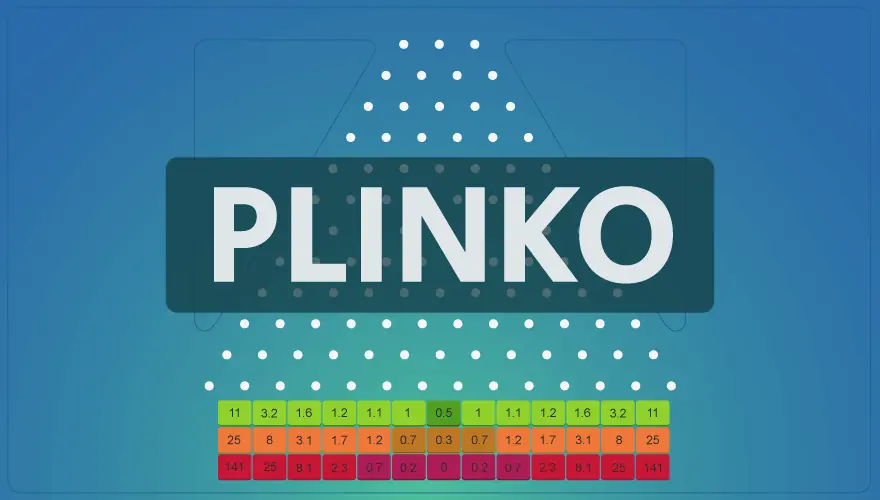
Plinko is a ball-drop gambling format built around a vertical board filled with pegs. The player chooses a stake, often selects a risk level, and then releases one or multiple balls from the top. As each ball hits the pins, it changes direction randomly until it falls into one of several payout pockets. Each pocket carries a multiplier. The center usually offers more common, lower returns, while the far edges tend to hold rarer and much larger multipliers.
The reason this game attracts attention is not just that it is visually clean. It is the combination of instant resolution, visible randomness, and direct emotional feedback. In a slot, the random process is hidden inside the spin engine. In Plinko, randomness feels exposed. You can watch the ball bounce, hesitate, shift direction, and miss a high multiplier by a single peg. That creates a stronger illusion of closeness than many reel-based products. One of the most memorable things about Plinko is that a near miss looks personal, even though the result is still governed by chance.
Another reason the format stands out is that it compresses decision-making. Many games ask the player to think about paylines, symbols, bonus triggers, or side bets. Plinko strips that away. The key decisions are usually limited to stake size, number of rows, and risk level. That makes entry easy for new players, but it also means every chosen setting matters more. There is less visual noise and less strategic clutter. What remains is a direct relationship between stake, variance profile, and outcome distribution.
At 21grand casino, that kind of structure can appeal to players who want a fast, readable session without learning a full ruleset. But “easy to start” should not be confused with “easy to manage.” The game can move quickly, and the emotional pull of repeated drops can be stronger than many newcomers expect.
How the Plinko board actually works in a real-money session
The core mechanic is straightforward: the ball starts at the top and descends through a triangular field of pegs. Every collision sends it slightly left or right. Over many drops, this creates a distribution where balls tend to land more often near the center and less often at the edges. That basic logic is important because it explains why the highest multipliers are typically placed in the least frequent landing zones.
In practical terms, the board is not “aimed” by the player in any meaningful skill-based sense. Some versions let you choose a drop position, but this should not be mistaken for a reliable control tool. The final result remains random. The visible path can tempt players into thinking they are reading patterns, but Plinko is not a precision game. It is a probability game presented through motion.
Most versions of Plinko, including the type players expect to find when searching for 21 grand casino Plinko, revolve around three variables:
- Stake size — the amount placed on each drop.
- Risk level — usually low, medium, or high, affecting the payout map.
- Board depth or rows — in some versions, more rows mean a broader spread of possible outcomes.
These settings shape the entire session. A low-risk board usually offers a tighter cluster of smaller multipliers, which can make results feel more even. A high-risk board spreads more value toward rare edge outcomes, which means many modest or losing results may occur before a larger hit appears. The game itself does not become more complicated, but the experience changes dramatically.
| Setting | What it changes | What it means for the player |
|---|---|---|
| Low risk | Narrows the payout range | More stable rhythm, fewer sharp swings, lower ceiling |
| Medium risk | Balances common results and stronger multipliers | Mixed session profile, moderate tension, broader variance |
| High risk | Pushes more value into rare outcomes | Longer losing stretches are more likely, but top-end hits become more meaningful |
| More rows | Expands the route and outcome spread | Can increase dramatic movement and widen result distribution |
One practical observation I think players often miss: in Plinko, the board is not there to help you predict the next result. It is there to make randomness visible. That difference matters. The animation gives the event a narrative, but the narrative should not be mistaken for influence.
Why the rhythm of Plinko feels so different from slots
The pace of Plinko is one of its defining traits. A drop resolves quickly. There are no long reel spins, no symbol evaluations across multiple paylines, and usually no layered bonus sequence before you know where you stand. That makes the session feel immediate. You stake, release, watch, and get the result in seconds.
This speed has two consequences. First, it makes the game easy to dip into. Second, it can accelerate bankroll movement much faster than players expect. A slot spin may include anticipation through reel slowdown, feature teases, and bonus buildup. Plinko compresses all of that into a short visual arc. The tension is concentrated rather than stretched.
There is also a distinct psychological loop at work. Because each drop is brief, it is easy to think, “just one more.” That is common in many casino games, but Plinko intensifies it through repetition. The action is so clean that a session can become mechanical very quickly. On a practical level, this means budgeting matters more than the minimalist interface suggests.
Another notable point is that Plinko creates suspense without needing a traditional bonus round. The fall itself is the event. The bounce pattern becomes the drama. That is one reason some players find it more engaging than expected, while others lose interest faster than they would with a feature-rich slot. If you enjoy layered content, unlocks, and changing reel states, Plinko may feel too stripped back. If you prefer direct action and instant feedback, it can be unusually effective.
Risk levels, probability, and what the board does not tell you
Before launching a session at 21 grand casino, the most important thing to understand is that Plinko is not a “safe” game just because the interface is simple. The visible board can make the experience look transparent, but transparency of presentation is not the same as gentleness of outcomes.
The payout structure is based on probability distribution. Central slots are hit more often because there are more possible paths leading toward them. Edge slots are much less common, which is why they can carry headline multipliers. That creates a familiar trade-off: frequent smaller returns versus rare bigger ones. The exact balance depends on the version, but the principle remains the same.
Here is the practical reading of that structure:
- Rare top multipliers should be treated as exceptional events, not as realistic short-session targets.
- High-risk mode changes the feel of the session more than many players expect; it is not just a cosmetic option.
- A sequence of low returns does not mean a large result is “due”; each drop remains independent.
This is where Plinko exposes a common player mistake. Because the path is visible, people sometimes start assigning meaning to recent movement: too many left-side finishes, too many center hits, too many low multipliers in a row. But the board does not owe the player balance in the short term. One of the clearest truths about Plinko is that its fairness, where licensed and properly configured, exists over large mathematical samples, not over the next ten drops.
A second observation worth remembering: high-risk Plinko can feel quiet for longer than a high-volatility slot because there is no feature cycle to break the drought. On a slot, even a losing stretch may include animation changes, partial line hits, or bonus teases. In Plinko, a cold run can feel stark. Some players appreciate that honesty. Others find it draining.
How Plinko compares with slots and other casino games
Plinko sits in an unusual position between instant-win products and more traditional casino entertainment. It is not a slot in the classic sense. There are no reels, symbols, scatters, expanding wilds, or free-spin structures driving the experience. It is also not a table game in the strategic sense, because there is no decision tree comparable to 21 Grand Casino slots table games and live casino options or baccarat betting logic. Instead, Plinko offers a distilled random event with a visible trajectory.
That distinction matters because player expectations often come from the wrong category. Someone arriving from slots may expect bonus depth, audiovisual progression, and stronger thematic packaging. Someone arriving from roulette details may expect a more formal betting framework. Plinko offers neither. Its appeal is reduction. It removes layers until only stake, drop, and multiplier remain.
| Format | Main source of engagement | Typical player experience |
|---|---|---|
| Plinko | Visible descent and multiplier landing | Fast, direct, highly watchable, variance-led |
| Classic slots | Reel outcomes, symbols, bonus rounds | More layered, feature-driven, theme-dependent |
| Roulette | Bet selection and wheel result | Structured wagering, familiar odds framing |
| Crash-style games | Cash-out timing | More interactive, decision pressure during each round |
Compared with slots, Plinko usually offers less thematic depth but more mechanical clarity. Compared with roulette, it feels less formal and more kinetic. Compared with crash formats, it removes timing pressure but keeps the attraction of quick rounds. That combination helps explain why the game has become so visible across modern casino platforms.
Where Plinko delivers value and where it becomes limited
The strongest side of Plinko is clarity. I can explain the full premise to a new player in under a minute, and they can still have a meaningful understanding of what they are about to play. That is rare in online gambling, where many products hide complexity behind polished presentation. Plinko does not ask for much interpretation.
Its second major strength is pacing flexibility. Depending on the settings, the same board can feel calm and controlled or sharp and swing-heavy. That makes it adaptable. A player who wants a lighter session may lean toward lower risk. A player chasing stronger peaks may choose higher variance and accept the trade-off.
The third strength is emotional readability. You always know what just happened. The result is immediate and visually legible. There is no need to decode paylines or calculate whether a near-feature outcome was actually meaningful. This directness is one reason many players keep coming back to the format.
Still, the limitations are real. Plinko can become repetitive faster than a well-designed slot because its loop is intentionally narrow. If you need narrative progression, evolving bonus states, or a sense of discovery, the board may eventually feel one-dimensional. There is also less room for the kind of “entertainment cushioning” that slots provide through sound, animation, and side events.
Another weak point is that its simplicity can encourage overconfidence. Some players read the clean layout as a sign that they are in a more controllable environment. They are not. The lack of complexity does not reduce variance. In some configurations, it highlights it.
Who is likely to enjoy 21 grand casino Plinko, and who may not
In my view, 21 grand casino Plinko is best suited to players who value speed, visible randomness, and a low barrier to entry. If you enjoy seeing the event unfold rather than waiting for a hidden engine to reveal the result, Plinko can be very satisfying. It also suits players who prefer short sessions with clear parameters instead of long feature hunts.
It may also appeal to users who want a break from traditional slot structure. Sometimes players are not looking for more reels, more symbols, or more bonus rounds. They want something cleaner. Plinko answers that need well.
On the other hand, the format may not suit everyone. It is a weaker fit for players who:
- need strong thematic immersion to stay engaged;
- prefer strategic decision-making beyond stake and setup;
- become frustrated by repeated low-value outcomes without feature variation;
- tend to chase rare top multipliers too aggressively.
If you are the kind of player who enjoys reading a paytable, tracking symbol behavior, and waiting for a bonus round to reshape the session, a good slot may simply offer more. If you want a stripped-back format where every result is immediate and the suspense lives in the fall itself, Plinko makes much more sense.
What to check before you start a Plinko session
Before opening a real-money round, I recommend looking at the setup with more care than the minimalist screen suggests. Plinko rewards players who understand the session conditions before the first drop.
Here are the most practical checkpoints:
- Review the risk setting carefully. Low, medium, and high can produce very different bankroll behavior.
- Understand the multiplier map. Do not focus only on the highest number; pay attention to where most outcomes are likely to land.
- Set a session budget in advance. The fast round cycle can make spending feel slower than it really is.
- Consider trying a demo mode first if available. This helps you feel the pacing without financial pressure.
- Do not build a strategy around streak interpretation. Recent drops do not create predictive value for the next one.
A third observation that separates experienced play from impulsive play is this: in Plinko, the most dangerous moment is often not after a loss, but after a near miss. Watching the ball bounce close to a top multiplier can create a false sense that you are “around the corner.” You are not around the corner. You are simply watching a random path that ended near a rare slot. Treating near misses as signals is one of the quickest ways to misread the format.
Final verdict on 21 grand casino Plinko
21 grand casino Plinko offers a very specific type of gambling experience: fast, visually transparent, easy to enter, and capable of producing very different session profiles depending on the chosen risk level. Its biggest strength is not novelty for its own sake. It is the way it turns a simple ball-drop concept into a tense probability event that players can instantly understand but not easily master emotionally.
What the game does well is clear. It delivers quick rounds, visible outcome logic, and a clean interface that removes unnecessary clutter. For players who want direct action without the layered structure of slots, that is a genuine advantage. It also gives users a more obvious sense of how variance is being presented, especially when switching between lower and higher risk modes.
Where caution is needed is equally clear. The board may look harmless, but the session can move quickly and the swings can be sharper than new players expect. High-risk settings, in particular, should be approached with discipline. The top multipliers are part of the attraction, but they should never be treated as routine targets.
So, is Plinko worth trying at 21 grand casino? For the right player, yes. If you like immediate results, visible randomness, and a format that gets to the point without filler, it can be a strong fit. If you need deeper structure, extended bonus content, or a stronger sense of control, another casino format may suit you better. That is the honest conclusion. Plinko is not for everyone, but for players who understand its rhythm and respect its variance, it offers one of the clearest and most distinctive experiences on a modern casino game page.
FAQ
How does Plinko work in 21 Grand once the ball drops?
A ball is released and bounces through pegs before settling into a payout slot. Each landing position determines the multiplier and the result for that round.
What should players check before their first real-money Plinko round?
Check the risk level shown for the session and review the round limits for your account balance. Confirm the selected stake matches what is intended, since every drop uses that stake.
Can Plinko be played in demo mode, and does it follow the same mechanics?
Demo mode uses the same ball-drop and peg-bounce mechanics so the rules feel familiar. Results in demo are not tied to the same balance as real-money play, and stakes are simulated for practice.
When using a mobile device, does switching between app and browser affect the current Plinko session?
Switching devices can interrupt an ongoing round, especially if the game reloads. Before leaving the screen, ensure the round has completed and the outcome is visible. After switching, re-open Plinko and start a new round if needed.